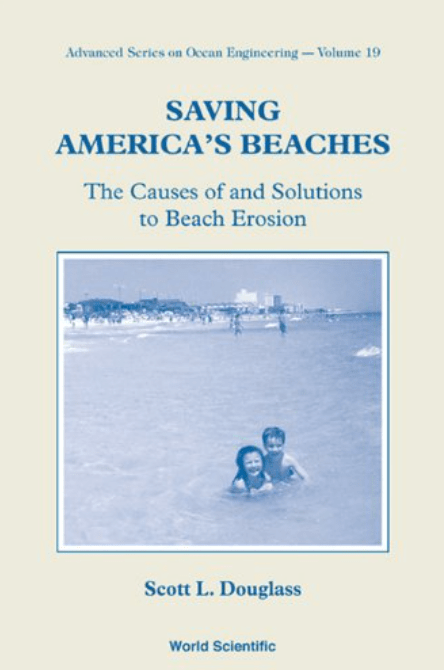
At this week’s Point Clear Rotary Club meeting, we welcomed Dr. Scott L. Douglass, Vice President and Coastal Engineering Practice Leader at Goodwyn Mills & Cawood, Emeritus Professor at the University of South Alabama, and author of Saving America’s Beaches: The Cause of and Solutions to Beach Erosion.
Dr. Douglass has spent more than 45 years studying how waves, storms, and human decisions affect our coastlines. With a blend of science, storytelling, and humor, he shared insights gathered from visiting more than 500 beaches across the United States. His message was clear: beaches are not just vacation spots. They are living systems that carry stories of geology, ecology, and community, and they are deeply tied to our safety and economy.
Stories from America’s Shores
Throughout his presentation, Dr. Douglass drew from his travels and experiences. He described beaches so stunning they could have come from a fairy tale. He joked about choosing knowledge over wealth or beauty, and how that choice sometimes felt less practical than it sounded.
He also shared images of everyday heroes, like the thousands of volunteers in South Carolina who walk beaches at dawn to monitor sea turtle nests. And he painted a vivid picture of the Jersey Shore on the Fourth of July, where fireworks stretch across 35 miles of sand, creating one of the most spectacular sights he has ever witnessed. These moments showed how beaches are woven into both our natural and cultural heritage.
The Science of Sand and Sea
Dr. Douglass reminded us that every beach has its own story. Some are ancient bluffs carved by waves. Others, like Dauphin Island, have shifted over time in response to storms and sea level changes. Beaches are shaped by tides, currents, and weather, and they evolve constantly.
He gave a striking example: just 12,000 years ago, sea level was 300 feet lower than it is today. That means the coastline was far offshore compared to where it stands now. This constant change underscores why understanding coastal science is so important.
He also explained how rip currents form and why they are so dangerous to swimmers. Instead of panicking and fighting them, he advised, it is best to remain calm and let the current carry you a short distance offshore before it dissipates. Simple knowledge like this, he said, can save lives.
Engineering Solutions
Much of Dr. Douglass’s career has focused on how engineering can either harm or help beaches. Poorly designed seawalls, highways, and developments can speed up erosion and destroy shorelines. On the other hand, projects rooted in sound science and careful planning can restore and even improve them.
The most effective tool, he explained, has been beach nourishment—rebuilding eroded beaches with carefully placed sand. He pointed to examples from New Jersey, California, and the Gulf Coast where nourishment transformed areas once considered “lost” into thriving, safe, and beautiful beaches again.
While critics sometimes call nourishment expensive, Dr. Douglass compared it to everyday infrastructure. We repave highways and repaint houses because we know they need regular care. Beaches, he said, are no different. They are an investment that pays off in storm protection, tourism, and quality of life for coastal communities.
Looking Ahead
Sea level rise and stronger storms are challenges that will continue into the future. Yet Dr. Douglass is confident that good coastal engineering, combined with smarter development decisions, can protect America’s beaches for generations to come. He urged communities to back off where possible, replenish beaches when necessary, and always remember the enormous value they bring.
For Dr. Douglass, this message is not just professional but also personal. He and his wife Jenny have called Fairhope home for 33 years, raising three children in the public schools here. His expertise has shaped projects across the nation, but his roots and perspective are firmly grounded on the Gulf Coast.
We are grateful to Dr. Douglass for sharing his time and knowledge with the Point Clear Rotary Club. His updated edition of Saving America’s Beaches will no doubt continue to guide communities, policymakers, and everyday beach lovers who want to ensure that these treasured landscapes endure.


Leave a comment